
How do birds communicate with each other?
Birds use their voices to communicate with each other. Different sounds have different social functions, similar to language in us humans.
There are basically two main types: songs and calls.
1. Songs

What are songs?
Songs are longer, melodic, and often complex sequences of sounds. They are mainly performed by males – especially during the breeding season.
What are songs used for?
Songs have several important functions:
- Territory marking: The bird signals: „This area belongs to me!“ This keeps other animals of the same species at a distance.
- Attracting mates: A beautiful or varied song can increase the chances of finding a mate.
- Species recognition: Each bird species has its own distinctive song. This is how birds find mates of the same species.
Songs are primarily used to find a mate and to defend one’s own territory.
How does the song of a common yellowthroat sound?
The common yellowthroat (Geothlypis trichas) is a songbird from the wood-warbler family. Many males can be recognized by their black facial mask with a yellow throat area; females are usually more plainly colored.
2. Calls
What are calls?
Calls are short, simple sounds that often sound several times in succession. They are used by both females and males, throughout the whole year.
What functions do calls have?
Calls are especially important in everyday life:
- Contact and social calls: Help keep groups together, for example in family groups or among migratory birds.
- Warning calls: Alert others to dangers, such as birds of prey or cats.
- Aggression or threat calls: Used in conflicts, for example when two animals get too close.
Calls help birds stay in contact and react quickly to danger.
How does the call of a common yellowthroat sound?
Singing must be learned
Similar to how children learn to speak, many true songbirds have to learn their full song first. They listen to adult members of their own species and practice until their own song sounds right.
How does the song of a white-throated sparrow differ, depending on whether it is a juvenile or an adult?
This is how a juvenile bird sounds:
This is how an adult bird sounds:
„Dialects“ in bird songs
Bird songs can change depending on the region and over time – similar to dialects among us humans. If you record the song of adult birds of the same species in two different places, they often sound slightly different, even though the basic pattern stays the same.
How does the song of a white-crowned sparrow vary across different regions?
This is how two individuals in different locations sound:
More than singing
Birds don’t only use their voices to communicate with each other. Do you know a bird that is often heard even though it isn’t singing?
It’s the woodpecker.
When a woodpecker taps its beak on a tree, this sound is called “drumming”. It often chooses hollow tree trunks because they amplify the sound. This drumming mainly serves to mark territory and attract mates, much like the song of songbirds. Woodpeckers also peck when searching for food. But this pecking is usually quieter than territorial drumming.
Each woodpecker species has its own “rhythm”: the length, tempo, number of beats, and pauses between beats differ and make the species recognizable to trained ears.
How does the sound of drumming differ between different woodpecker species?
This is what a downy woodpecker sounds like:
And this is what a hairy woodpecker sounds like:
Mysterious birds – what’s chirping here?
Let’s listen to some bird calls together and find out what species they are.
Which bird is that?
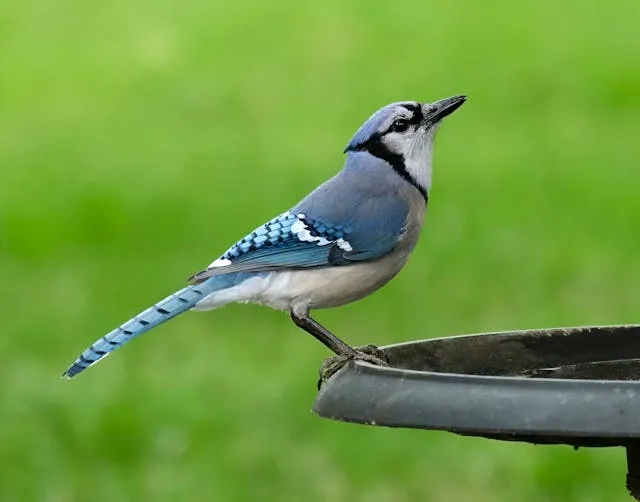
It’s a blue jay. The blue jay comes from North America and is considered a particularly intelligent bird. It is related to our European Eurasian jay – both show similar behaviors and belong to the corvid family, which is known for its high learning ability.
Blue jays and Eurasian jays are sometimes called the “police of the forest”. They inform other animals about possible dangers with loud warning calls. At the same time, they use their intelligence to their advantage: they can imitate the calls of birds of prey to drive other birds out of their territory or keep them away from feeding sites.
And the next bird?
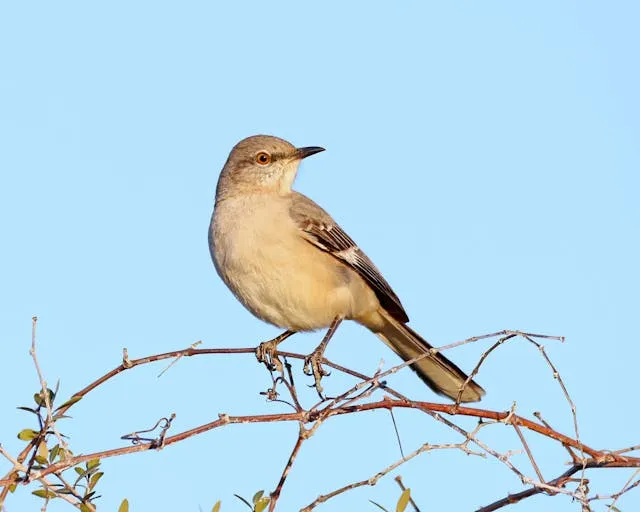
It’s a blue jay? No, it’s a mockingbird.
Even though the beginning of the song sounds like a blue jay, this is a mockingbird. This North American songbird is famous for imitating the voices of other birds.
The mockingbird sings long, loud, and very complex songs, imitating not only other bird species but also sounds from its surroundings – for example frogs, crickets, cats, or even artificial sounds such as squeaking wheels or car alarms. To us humans, these imitations often sound deceptively real, but not every bird is fooled by them.
The mockingbird is also considered fearless and assertive: it vigorously defends its breeding and wintering territory and sometimes calls fellow birds to help when danger threatens, so that together they can drive away larger predators.
And what can you hear here?
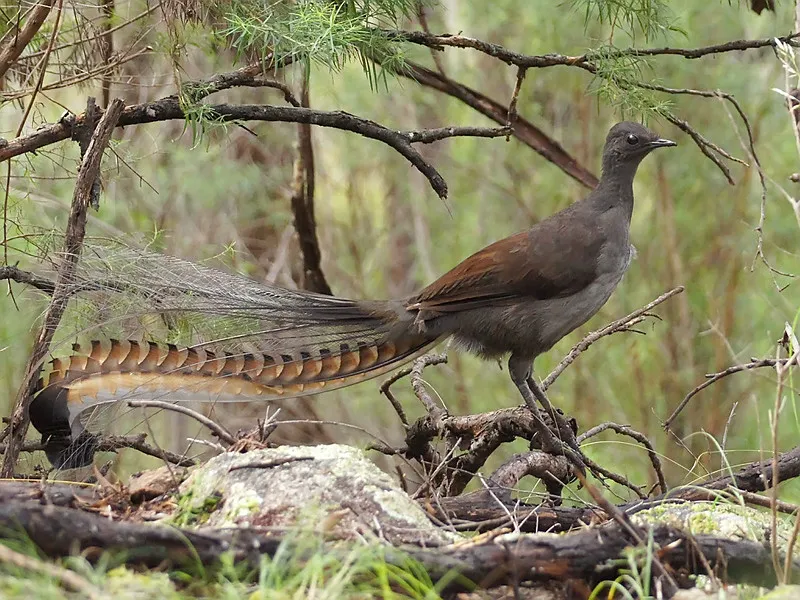
It’s getting crazier and crazier!
The lyrebird is a special bird from Australia. Its vocal organ (the so-called syrinx) is one of the most highly developed among songbirds. This lets it imitate an astonishing variety of sounds from its surroundings – from other bird species to environmental and everyday noises.
Lyrebirds are very shy. Often you only notice their presence because many different bird songs seem to be coming from one and the same spot.
Could you hear everything it imitates? The lyrebird often also imitates chainsaws, camera shutters, car horns, and even human voices.
Who could that be?
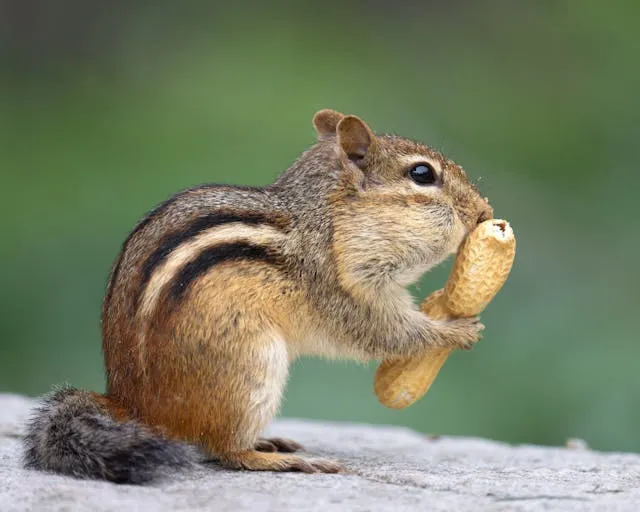
That’s not a bird at all. It’s not only birds that make sounds that can sound like bird calls – other animals surprise us with them too. A good example is the chipmunk (in German, „Streifenhörnchen“).
The English name comes from the loud “chip” call that these animals often make, in addition to a trilling sound. That’s why their sounds can sometimes be easily confused with bird calls.
See your own voice
A spectrogram shows which sounds are currently audible: low frequencies at the bottom, high frequencies at the top, and time passing from left to right. In the examples above, you see the image of the whole recording with a line marking the current position.
Try it with your own microphone – speak, whistle, or sing and watch how the image changes!